Each film on the following list had at least one public
theatrical screening in the Milwaukee area for the first time in 2012. Due to the vagaries of international film
distribution, some of these films were released in other areas of the world in
2011, while some won’t be released in other places until 2013, but for the
purposes of this list these are all 2012 releases since they were the ones that
I had a reasonable opportunity to see for the first time this year. Before getting to the main list, here are
some quick lists explaining why certain notable films didn’t make the cut.
Movies that I really
wanted to see that I missed:
El Sicario (Room 164) (Gianfranco Rosi, France, 80 min.)
Killing Them Softly (Andrew Dominik, USA, 97 min.)
Magic Mike (Steven Soderbergh, USA, 110 min.)
Seven Psychopaths
(Martin McDonagh, UK, 110 min.)
Movies that didn’t
make it to the Milwaukee area this year:
Amour (Michael Haneke, Austria/France, 127 min.)
The Comedy (Rick Alverson, USA, 90 min.)
Cosmopolis (David Cronenberg, Canada, 109 min.)
Hara-Kiri (Takashi Miike, Japan, 126 min.)
Holy Motors (Leos Carax, France, 115 min.)
Like Someone in Love (Abbas Kiarostami, Japan, 109 min.)
The Loneliest Planet (Julia Loktev, USA, 113 min.)
Not Fade Away (David Chase, USA, 112 min.)
Red Hook Summer (Spike Lee, USA, 121 min.)
This Must Be the Place (Paolo Sorrentino, Italy, 118 min.)
To the Wonder (Terrence Malick, USA, 112 min.)
Zero Dark Thirty (Kathryn Bigelow, USA, 157 min.)
A Masterpiece

1) The Turin Horse (Bela Tarr, Hungary, 146
min.)
Master director Bela Tarr has already announced that The Turin Horse will be his last film,
but the apocalyptic weight of its sounds and images makes it feel like an
appropriate end to the era of traditional cinema altogether. It’s certainly hard to imagine that anyone
will produce such gorgeous black-and-white images on celluloid in the
future. The story, which follows a
farmer (Janos Derzsi) and his daughter (Erika Bok) as they struggle to survive
during a brutal windstorm, could hardly be more simple, but Tarr and his
collaborators get maximum physical impact out of each elaborate tracking shot
and vivid post-synched sound effect, giving the film an all-consuming sense of
palpable dread that’s hard to shake off.
The Turin Horse works equally
well as a simple neorealist narrative, a complicated stylistic exercise, and a
powerful farewell to classical cinema.

2) A Separation (Asghar Farhadi, Iran, 123
min.)
Though ostensibly the story of a couple (Leila Hatami and
Peyman Moaadi) undergoing marital strife, writer-director Asghar Farhadi’s
intense drama is actually about the ways that their ongoing dispute directly or
indirectly complicates the lives of everyone surrounding them. Farhadi’s script is ingeniously plotted
(indeed, it is the most well-structured screenplay in recent memory), but the
characters’ actions always feel like logical outgrowths of their established
personalities rather than mere plot mechanics.
Everyone in the film has understandable reasons for behaving as they do,
which makes it all the more tragic when their needs or beliefs cause them to
hurt each other. Flawless writing,
terrific ensemble performances, and a wealth of fascinating background details
about modern-day Tehran combine to make A
Separation one of the finest films of recent years.
A- Excellent

3) Bernie (Richard Linklater, USA, 104
min.)
This true crime story follows the buildup to and aftermath of
the murder of a wealthy widow (Shirely MacLaine) by a small town’s beloved mortician
(Jack Black), but director Richard Linklater is less interested in producing
tawdry thrills than in understanding the strange details surrounding the
case. The film’s genial tone and
casually sophisticated blend of documentary and narrative film techniques
allows Linklater to investigate the circumstances that caused the townspeople
to refuse to believe that the funeral director could’ve been responsible for a
murder that he openly confessed to. As
funny as many of the folksy talking heads segments are, it never appears as if
Linklater (who is from an area of Texas not far from where the murder took
place) is inviting viewers to mock the speakers or their rural culture so much
as he is allowing them to help tell the story.
Without ever losing its moral grounding, the film suggests that the
murder may have been justified, and that the incident is neither the defining
event nor the most interesting thing about its titular character’s odd life.
B+ Special

4) Looper (Rian Johnson, USA, 118 min.)
Equally successful as a meditation on the human race’s
inability to learn from our past mistakes and as an exciting blockbuster action
film, Looper is one of the most
ambitious and interesting science fiction films of recent memory. It’s clear that writer-director Rian Johnson
spent a lot of time working out the details of the film’s vividly realized
desolate future, where the mafia uses outlawed time travelling technology to
send their assassination targets directly to the “loopers” who will assassinate
them. One such looper (Joseph
Gordon-Levitt) runs into all sorts of mind-bending problems when the future
version of himself (Bruce Willis) evades his time travel murder, putting the
young hitman in a situation where he must simultaneously hunt down his future
self and evade the henchmen of his angry mob boss (Jeff Daniels). What follows is both a heady mind-fuck and an
unpredictable action flick that is dense with ideas that are as
thought-provoking as they are viscerally awesome.

5) Django Unchained (Quentin Tarantino,
USA, 165 min.)
Quentin Tarantino’s follow-up to Inglourious Basterds (2009) is another historical revenge fantasy,
this time set in the Antebellum south and chronicling the adventures of a
recently-freed former slave (Jamie Foxx) and his eccentric German benefactor
(Christoph Waltz). The film has already
caught some flack for using slavery as material for an ultra-gory exploitation
story, but while Tarantino’s idiosyncratic approach to sensitive subject matter
is far from politically correct, his depictions of racist brutality have a
powerful sting beyond what is needed as grist to justify the revenge plot. This is one of the few recent films to deal
head-on with our culture’s racial issues, but that doesn’t prevent it from also
being one of the most wildly entertaining movies of the year, full of
incredibly vivid action sequences, witty dialogue, and tremendous supporting
performances from Waltz, Samuel L. Jackson, and Leonard DiCaprio. Some pacing and structural problems crop up
in the film’s overextended climax, but overall Django is exciting and audacious even by Tarantino’s high
standards.

6) The Kid with a Bike (Jean-Pierre &
Luc Dardenne, Belgium, 87 min.)
The Dardenne Brothers always manage to get thoroughly
lived-in performances out of their ensemble casts, which is essential to their
films’ verisimilitude-dependent aesthetic.
After six feature films dealing with the struggles of Belgium’s
underclass, it’s clear that the Dardenne’s know their films’ milieu like the
back of their hands, and the intense results they consistently achieve seem
almost effortless. But the fact that the
protagonist of their latest film is a young boy (played by 12-year-old newcomer
Thomas Doret) who is as authentically realized as any of the Dardenne’s other
characters underscores just how hard the duo must work to make their films seem
so natural. Doret’s remarkable lead
performance anchors this grippingly heartbreaking story about an abandoned
child’s efforts to reconnect with his father and hold on to his few remaining
belongings. This is one of the saddest
movies of the year, but also one of the most hopeful, and the story’s brighter
moments feel as earned and realistic as its crushing lows.

7) This is Not a Film (Jafar Panahi &
Mojtaba Mirtahmasb, Iran, 75 min.)
Celebrated director Jafar Panahi has been placed under house
arrest and banned from filmmaking by Iranian authorities, requiring him to find
some atypical outlets for his creative energy.
Shot largely on amateur handheld cameras and cellphones, the documentary
This is Not a Film presents itself as
a ramshackle home movie, but is in fact a fairly elaborate personal essay about
the possibility of creating art under fascism.
Panahi acts out scenes from unproduced screenplays, provides impromptu
audio commentary while watching scenes from his own films, takes phone calls
regarding various legal troubles, and listens to the sounds of a rowdy street
festival that is taking place in spite of the government’s efforts to stop
it. There are also stretches of the film
where nothing much happens, as Panahi plays with his pet iguana or digs through
his extensive DVD rack. This is Not a Film is no substitute for
genuine Panahi classics like Crimson Gold
(2003) or Offside (2006), but that’s
sort of the point; Panahi, like many of his Iranian filmmaking contemporaries,
is being tragically denied the right to do his job. This documentary is ultimately more important
as a social statement than as cinema, but it’s a genuinely stirring call to
arms.

8) Le Tableau (Jean-Francois Languionie,
France, 78 min.)
This wonderfully inventive animated film is designed for
children, but has more wit and allegorical power than most films intended for
adults. The story starts out in an
unfinished painting, where a group of upper-class Allduns (completely drawn
characters) lord over the Halvsies (characters missing color on part of their
bodies) and the impoverished Sketchies (black and white scribbles). A star-crossed romance between members of
different classes leads several characters to escape from their painting in
search of The Painter, who will presumably bring harmony to their lives. Their search leads them to inhabit the worlds
of several other paintings, each of which brings a new and enchanting visual
style to the film. Gorgeously animated
and endlessly imaginative, Le Tableau
is not just the year’s most charming family film, but one of its best
all-around works of art.

9) Sacrifice (Chen Kaige, China, 132 min.)
Early reviews made me fear that Chen Kaige’s opulent period
drama might be a dull prestige film, but this non-musical adaptation of an
ancient Chinese opera is actually a spectacularly over-the-top melodrama filled
with wild plot twists, exciting battles, and countless eccentric touches. The enjoyably convoluted plot is too
complicated to adequately describe in one paragraph, but suffice to say that it
involves secret identities, assassination by mosquito, and an ultimatum that involves
the potential slaughter of 100 babies.
The story may ultimately be too broad to have much emotional or
psychological depth, but Sacrifice is
still one of the most exciting and exquisitely filmed action films of the year.
B Very
Good

10) Lincoln (Steven Spielberg, USA, 150
min.)
Steven Spielberg’s considerable skillset generally lends
itself better to action blockbusters than serious dramas, which is why it’s
such a welcome surprise that his Lincoln
is less an award-groveling prestige film than an intellectually demanding
consideration of the democratic process.
The film is ostensibly an epic presidential biopic, but is really more
of a complex chamber drama about the machinations required to make the 13th
Amendment a reality. Some of Spielberg’s
trademark sappiness slips through the cracks (especially in John Williams’
annoyingly emotion-stoking score), but for the most part Lincoln eschews easy melodrama in favor of a John Ford-ian
consideration of the moral compromises and mortal sacrifices required to make
progress possible. Lincoln also recalls the work of Ford in its immaculate shot
compositions and its phenomenal ensemble cast.
Daniel Day-Lewis is excellent as expected in the title role, and even
the smallest supporting roles are filled with ringers like Jared Harris, John
Hawkes, Walton Goggins, and Michael Stuhlbarg.
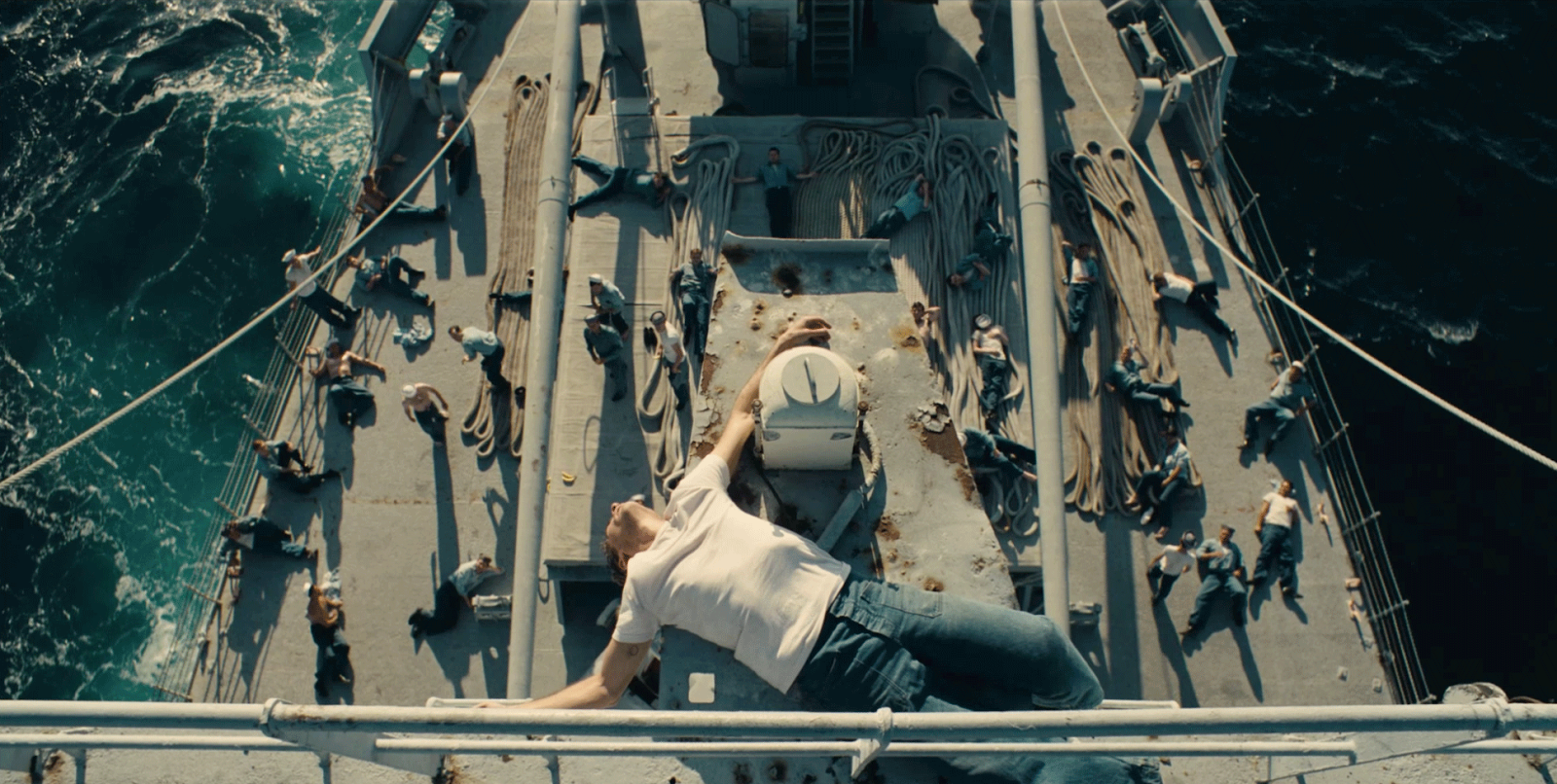
11) The Master (Paul Thomas Anderson, USA,
137 min.)
Paul Thomas Anderson never fails to aim high. His latest picture is a period epic that
deals with nothing less than the post-WWII psychology of the United States, as
filtered through the development of new age religions and the shifting tide of
sexual mores. Utilizing unbelievably
rich cinematography (in the virtually extinct 65 mm format) and an avant-garde
Johnny Greenwood score, Anderson has made one of the most purely cinematic
films of the year. The Master certainly looks, sounds, and feels thoughtful, but the
film ultimately has more stylistic depth than genuine insight. Granted, the writer-director’s borderline-masterpiece
There Will Be Blood (2007) had
similarly little to say about its big themes, but the battle of wills between
that film’s main characters had a visceral impact that The Master’s conflict between a hack spiritual guru (Phillip
Seymour Hoffman) and a mentally disturbed WWII vet (Joaquin Phoenix)
lacks. The characters remain ciphers
despite the incredible efforts of Hoffman and Phoenix, both of whom are working
at the highest imaginable level here.
Despite the film’s intellectual shortcomings, it is one of the most
stylistically ravishing films of the year, and it remains gripping even when it
isn’t clear what Anderson is trying to get at.
12) A Dangerous Method (David Cronenberg,
UK, 99 min.)
A Dangerous Method
follows the true story of the turbulent relationships Carl Jung (Michael
Fassbender) had with his mentor Sigmund Freud (Viggo Mortenson) and his prize
patient Sabina Spielrein (Keira Knightley).
Appropriately enough, the film plays out like an extended psychotherapy
session, but director David Cronenberg and screenwriter Christopher Hampton
(adapting his play The Talking Cure)
are more interested in picking apart the outwardly respectable and bourgeois
Jung than the more obviously eccentric Freud or the hysterical Spielrein. The choice of focus proves wise, as it allows
the film to essentially psychoanalyze WWI-era Europe, touching on all sorts of
fascinating subjects in less than 100 minutes.
The only thing holding the film back from being one of Cronenberg’s best
is the over-the-top performance from Knightley, who mugs aggressively while
adopting a theatrical Russian accent that puts her in sharp contrast with the
more naturalistic performances of the rest of the cast. In fairness, Knightley’s is the film’s
trickiest role, and the actress undeniably made some bold and interesting
choices in her portrayal, but her performance ultimately stands out as the one
big flaw in an otherwise immaculately crafted psychological study.

13) V/H/S (Adam Wingard, David Bruckner, Ti
West, Glenn McQuaid, Joe Swanberg, Radio Silence, USA, 115 min.)
Horror anthologies rarely have more than one or two
worthwhile segments, and the faux-documentary subgenre of horror films became
tiresome the instant that The Blair Witch
Project became a sensation back in 1999.
Thankfully, this collection of five faux-documentary style horror shorts
(plus one frame story that links the different segments) is a consistently fun
and inventive anomaly. Sure, some
segments are stronger than others, but for the most part these shorts are
clever and stylish, displaying some of the best-ever use of the rarely
effective first-person camera perspective.
David Bruckner’s tale is particularly effective in that regard, using
hidden-camera glasses to capture a one-night stand that turns into a bloody
rampage. But the most exciting piece may
be the one from internet collective Radio Silence, who show off an impressive
command of realistic-looking special effects as they strand some enthusiastic
haunted house enthusiasts in a house that is actually haunted. V/H/S
is one of the most purely fun horror movies in years.

14) Beyond the Black Rainbow (Panos
Cosmatos, Canada, 110 min.)
Though Panos Cosmatos’ debut feature was made available on
DVD shortly before it made its way to Milwaukee theatres, it really demands to
be seen on the big screen. A pure
sensory experience, Beyond the Black
Rainbow relies entirely on its powerful audio-visual assault rather than
its sketchy narrative. Undoubtedly the
consistent mood of icy, creeping dread will feel tedious to some, but anyone
who connects with the film’s stunningly surreal shot compositions and the
ominous synth score by Black Mountain’s Jeremy Schmidt will be spellbound (at
least until a last-minute turn into slasher movie territory breaks the
mood). Though Cosmatos was clearly
inspired by the entire lexicon of trippy filmmakers (with Kubrick, Cronenberg,
and Lynch seeming like the most obvious reference points), his slow-motion
nightmare has a genuinely unnerving hallucinatory power that is all its
own. I’ll certainly never be able to
un-see the amazing flashback that sequence that (apparently) features a man
dipping into a pool of oil, disintegrating and re-composing in an inexplicable
field of light and smoke, and then devouring a frightened woman.
15) Wreck-It Ralph (Rich Moore, USA, 101
min.)
This charming tribute to video games could’ve been little
more than a string of clever in-joke references, but there is genuine heart in
the story of a villainous arcade character’s attempts to reform. The surprisingly sophisticated plot finds
Ralph (voiced by John C. Reilly) escaping from his own Rampage-style game in an effort to become the hero of an
ultra-violent sci-fi military epic, but accidentally getting trapped inside a
candy-coated kiddie racing game. Each
game contains its own complicated mythology and its own visual style, and a lot
of the fun of the movie comes from the increasingly chaotic intermingling of
the different universes. In some ways Wreck-It Ralph suffers from comparison
to the similarly conceived Le Tableau,
but what it lacks in the French film’s subversive political allegory it largely
makes up for with a density of smart jokes and ingenious plot twists.
16) Argo (Ben Affleck, USA, 120 min.)
Ben Affleck’s surprising development into a very solid craftsman
of tough suspense films continues with Argo,
his third and best directorial effort to date.
The wild true story involves a CIA operative (Affleck in an effectively
understated performance) helping U.S. diplomats escape from Tehran during the
Iran hostage crisis by pretending that they are part of a film crew scouting
locations for a science fiction movie.
Considering that the diplomats’ escape is a foregone conclusion for
anyone remotely familiar with the true story, the film is remarkably gripping,
maintaining a tense you-are-there feel even during the scenes that seem to
stray farthest from reality (such as the climax, in which a series of events
conspire to make the public airplane that the diplomats escape on take off just
seconds before their true identities are revealed to the people trying to stop
them on the ground).

17) Skyfall (Sam Mendes, UK, 143 min.)
Saying that Skyfall
is the best James Bond film since 1977’s The
Spy Who Loved Me may not be saying much – the series has somehow managed to
hit its nadir multiple times over the past several decades. Honestly, though, this installment can hold
its own against any of the previous
twenty-two 007 films, largely because it is the one that seems least slavishly
indebted to the Sean Connery-starring originals. Like all Bond films, Skyfall is more a string of setpieces than a coherent story – and
the attempts to add pathos to the special agent’s backstory don’t entirely come
off – but those big action sequences are truly magnificent, and they appear
frequently enough that the film never has a moment to become dull. This is also the most stylish and
aesthetically pleasing entry in the series to date, with the gorgeous,
surprisingly artsy cinematography of frequent Coen Brothers collaborator Roger
Deakins giving the film an unexpected but welcome sheen of genuine classiness.
18) Premium Rush (David Koepp, USA, 91
min.)
This fast-paced story about a bike courier (Joseph
Gordon-Levitt) who unwittingly gets involved in some intrigue has no emotional
or psychological depth whatsoever, but is as skillfully crafted as the Road Runner cartoons that it pays homage
to. A handful of better action movies
were released this year, but none can boast the pure fun of this stylish
exercise in impressively choreographed bike stunts.

19) Haywire (Steven Soderbergh, USA, 93
min.)
In its broad outlines, this martial arts/spy film hybrid
sounds like a direct-to-DVD piece of trash cinema, with mixed martial-arts
fighter Gina Carano acting as a modern-day Cynthia Rothrock. In execution, Haywire is one of the most stylish and exciting action films of the
year. Director Steven Soderbergh wisely
cuts out all of the background music during the movie’s many epic one-on-one
battles, giving every hit a truly nasty visceral impact and allowing the viewer
to focus on Carano’s vicious kick and chokehold-based fighting style, which
stands apart from the more familiar kung fu styles that we’re used to seeing in
martial arts films. Haywire also distinguishes itself from other films of its genre by
remaining compelling during its non-fight scenes, taking advantage of an
eclectic cast of adversaries for Carano (including Ewan McGregor, Michael
Douglas, Michael Fassbender, and Antonio Banderas) and throwing in some other
types of action scenes, including a fantastically edited car chase through
snowy woods and a tense scene where Carano resourcefully evades an entire SWAT
team.

20) Narcocorrido (Ryan Prows, USA, 24 min.)
As a member of the Milwaukee Film Festival shorts screening
committee, I saw a number of short films this year that I’ve excluded from the
list (somewhat arbitrarily) largely because few of them have really stuck with
me. But this tense extended action
scene, involving a horrifically botched attempted heist of a cartel’s drug
shipment, was one of the most suspenseful things to screen in theatres this
year, and marks director Ryan Prows as a true talent to keep an eye out for in
the future. Prows’ command of editing and
narrative shorthand puts the intensity of this action scene in the league of
the wild hotel shootout from No Country
for Old Men (2007).

21) Moonrise Kingdom (Wes Anderson, USA, 94
min.)
Wes Anderson’s detractors aren’t wrong when they say that he
does the same thing with every film (though 2009’s Fantastic Mr. Fox at least gave Anderson’s familiar aesthetic a
satisfying spin by employing rugged Rankin-Bass style stop-motion
animation). But it’s hard to complain
about Anderson continuously returning to the same well when the results continue
to be as wistful and beautiful as Moonrise
Kingdom, a charmingly absurd trifle about a young love that develops at a
summer camp.

22) The Secret World of Arrietty (Hiromasa
Yonebayashi, Japan, 94 min.)
Mary Norton’s classic children’s novel The Borrowers (1952), which follows a family of mouse-sized people
who live in the walls of a normal-sized human family’s house and borrow what
they need to survive, has a premise that is ideally scaled for the animated
medium. Studio Ghibli, the world’s
greatest animation studio, doesn’t drop the ball with their graceful and
gorgeously animated take on the story (co-scripted by Ghibli founder Hayao
Miyazaki and helmed by Hiromasa Yonebayashi, a veteran Ghibli animator making
an impressive directorial debut).

23) Tales of the Night (Michel Ocelot,
France, 84 min.)
In 2000, ace French animator Michel Ocelot made an anthology
film called Princes and Princesses
that depicted several short fairy tales by having black silhouetted characters
play against vibrantly colorful backgrounds.
Ocelot returns to that well with Tales
of the Night, even going so far as to include an identical framing device
in which two film students and an elderly technician insert themselves into
each story. While it’s somewhat
disappointing to see a creatively fertile mind like Ocelot relying so heavily
on an aesthetic that worked in the past – particularly on the heels of his
mind-blowing Azur and Asmar (2006) –
there is still a lot of charm in the style, and the six tales told here are
uniformly enchanting.

24) Brave (Mark Andrews & Benjamin
Chapman, USA, 100 min.)
Brave is a
reminder of the seemingly effortless charm and wit that Pixar are capable of
when they aren’t busy making unnecessary sequels to their most beloved
properties. In some ways the film almost
seems too effortless; though the simple mother and daughter bonding story takes
some amusingly unpredictable turns, the film’s medieval Scottish setting feels
less fully developed than the background worlds of Wall-E (2008) or Up
(2009). While Brave may not be up to the level of Pixar’s very best works, its
state-of-the-art computer animation and genuine sweetness still make it stand
out among a sea of interchangeable family films.

25) Pina (Wim Wenders, Germany, 103 min.)
The abstract modern dance pieces of choreographer Pina
Bausch are too creative to be restricted to a stage, and this documentary finds
many of her most elaborate productions being staged on the streets, beaches or
monorails of Germany. Director Wim
Wenders didn’t intend for these performances to be restricted to the theatre
screen, either, which is why he filmed the dancers flying into the audience’s
laps in 3D. I unfortunately missed
seeing the film in its intended 3D format, which is why this film is probably a
number of spaces lower on this list than it deserves to be. But even viewed in less than ideal
conditions, Pina is an ecstatic
explosion of pure creativity.
26) The Ambassador (Mads Brugger, Denmark,
93 min.)
Stunt documentarian Mads Brugger was last seen infiltrating
a North Korean cultural festival in the underappreciated gem The Red Chapel (2009). In his latest provocation, Brugger adopts the
guise of an ambassador to the Central African Republic, and gives viewers an
unprecedented first-hand glimpse into the corrupt and violent world of
international diplomacy. Brugger’s
hidden cameras render backstage deals involving bribery, diamond smuggling, and
even murder sickeningly transparent, and it’s frankly amazing that the director
was able to escape the production of this film without getting killed
himself. While The Ambassador lacks The Red
Chapel’s sense that Brugger is sticking up for the victims of Imperialism –
here he seems more interested in exposing the corruption of powerful political
figures than in digging into the psychology of the beleaguered Pygmies – this
is still one of the most vital and unique documentaries of the year.
27) The Imposter (Bart Layton, UK, 95 min.)
First-time feature director Bart Layton gives the full Errol
Morris treatment to an amazing true story about a Texas family duped into
believing that an international conman is their long-missing son. Layton’s
theft of Morris’ trademark style is unmistakable – there’s no shortage of
artful reenactments here – but the story is so bizarre and compelling that it’s
hard to complain too much. The
filmmakers discover some ominous and fascinating hints about why the family
might have been willing to accept a French-accented, black-haired man as their
Texas-born, blond-haired son, and also detail a grimly funny side story
involving a folksy local detective’s attempts to uncover what he believes will
be the dead body of the missing boy. The Imposter arguably ends just as
things are getting really interesting, but perhaps the frustration of its
non-resolution is appropriate given its creepily open-ended subject matter.

28) Ai Weiwei:
Never Sorry (Alison Klayman, USA, 91 min.)
This thorough yet breezily entertaining portrait of China’s
most prominent subversive artist manages to deal broadly with Ai Weiwei’s
struggles with political authorities, his innovations as an artist, and his
unconventional personal life without shortchanging any of these elements. First-time feature director Alison Klayman
could be accused of making an overly conventional documentary about an
extraordinary man – and certainly her film is less of a statement of purpose
than the similarly themed This is Not a
Film – but Ai Weiwei is such a fascinating and complicated figure that this
film’s aesthetics seem beside the point.

29) Life of Pi (Ang Lee, USA, 127 min.)
Ang Lee’s adaptation of Yann Martel’s hugely popular novel
is a genuine technical marvel, boasting the most sophisticated use of 3D
technology in any film to date and a seamless integration of gorgeous
live-action footage and convincing CGI.
The narrative is full of silly New Age claptrap, and is annoyingly
structured around an unnecessary frame story, but the ravishing beauty of the
film largely makes up for the weaknesses of its script.
B- Good
but flawed or insubstantial
30) The Cabin in the Woods (Drew Goddard,
USA, 95 min.)
Director Drew Goddard’s tribute to/dissection of horror
movie tropes is perhaps a bit too clever to ever be truly scary. Goddard’s script (co-written with Joss
Whedon) also has some limitations as satire; it has a thorough understanding of
the genre’s conventions but doesn’t go so far as to actually address what in
human nature causes these clichés to have continued appeal. That said, the film’s premise – and the less
you know about it ahead of time, the better – is genuinely novel, and the
finale, which features every movie monster imaginable, is fan service at its
finest and most fun.

31) The Avengers (Joss Whedon, USA, 143
min.)
This massive superhero blockbuster is occasionally weighed
down by its need to simultaneously service several different franchises. But considering the sheer number of things
that this film needed to accomplish in under 2 ½ hours, it is a remarkably
smooth and enjoyable ride overall, with writer-director Joss Whedon’s trademark
wit and the ensemble cast’s engaging presences lending real personality to what
could’ve seemed like a glorified exercise in corporate synergy. Whedon wisely puts the focus on the
frustrated team dynamic of Marvel’s ragtag group of superheroes, saving most of
the big fireworks for a genuinely impressive epic battle at the film’s climax. Each of the heroes (aside from Jeremy
Renner’s underserviced archery expert Hawkeye) gets at least one big moment,
with the Incredible Hulk (Mark Ruffalo) receiving two of the most awesome
crowd-pleasing bits in recent memory.
Like most of the recent Marvel films, The Avengers doesn’t have a particularly distinctive cinematic
style, but it is the rare action epic that delivers the fun that its premise
seems to promise.

32) Shame (Steve McQueen, UK, 101 min.)
Steve McQueen’s stylish study of sex addiction boasts a
magnetic lead performance by the reliable Michael Fassbinder, but the narrative
features a number of melodramatic clichés that don’t jibe with the director’s detached
aesthetic. While the film’s attempts at
raw emotional catharsis fall flat (and become almost laughable when Fassbinder
is required to break down and cry in several climactic scenes in a row), the
quieter moments, such as the ones chronicling the protagonist’s frustrated
attempts to connect with a romantically interested coworker, are handled with
real delicacy. Though the film is
dramatically inconsistent, it is always interesting to look at and listen to,
and its hazy vision of New York is unforgettable.
33) Elena (Andrey Zvyagintsev, Russia, 109
min.)
This artsy take on the old “woman kills her spouse to gain
his inheritance” story is affectingly life-sized when dealing with the
relationship between its characters, but lacking in the intensity that it would
need to bring its more suspenseful moments to life. The central relationship between the titular
nurse (Nadezhda Martina) and her wealthy husband (Andrey Smirnov) is perfectly
realized; the entire history of their relationship is clear without ever being
completely spelled out, and their frustrated yet loving attitudes toward each
other are practically written on their faces.
But director Andrey Zvyagintsev never departs enough from his cold style
(a methodically paced series of carefully composed shots) to kick the film into
the next gear when Elena has to make what should be a harrowing decision to
help support her deadbeat son.

34) Once Upon a Time in Anatolia (Nuri
Bilge Ceylan, Turkey, 157 min.)
Nuri Bilge Ceylan’s latest feature is a thorough chronicle
of a murder investigation that plays out in a series of gorgeously lensed
long-take sequences. The scope of the
film is impressive, especially considering that Ceylan was previously best
known for minimal character studies like Distant
(2002). But while the writer-director’s
newfound ambition is laudable, the story of his new film branches off in so
many different directions that none of them ultimately gain much traction,
making Once Upon a Time in Anatolia
feel like an intriguing setup lacking a payoff.
35) The Deep Blue Sea (Terence Davies, UK,
98 min.)
36) Mourning (Morteza Farshbaf, Iran, 85
min.)
The press materials for this film aren’t kidding when they
call first-time feature director Morteza Farshbaf a disciple of Abbas
Kiarostami. Every element of
Kiarostami’s distinctive aesthetic is on display here, from the use of a child
protagonist to the many long conversations that unfold in cars filmed by a
stationary camera to the frequent distant tracking shots of those same cars
travelling down twisty rural roads. The
style is still effective, and a fine way to tell this simple story of an
abandoned child searching for his parents, but hopefully Farshbaf will have the
courage to step out of his mentor’s considerable shadow with his next film.
37) Carnage (Roman Polanski, France, 80
min.)

38) The Expendables 2 (Simon West, USA, 102
min.)
39) This is 40 (Judd Apatow, USA, 134 min.)
Like the three previous Judd Apatow-directed films, This is 40 is a sometimes awkward
mishmash of character-based emotional truth and sitcom-ish broad comedy, based
more around a loose series of semi-improvised scenes than a conventional
narrative. In past films Apatow’s
willingness to delve into the backstories of even his most minor supporting
characters has paid huge dividends – the underrated Funny People (2009) was more interesting when drifting around in
its stand-up comedy milieu than when wrapping up its “one that got away” plot,
for example – but the many diversions from the central couple (Paul Rudd and
Leslie Mann) in This is 40 mostly
just feel like unnecessary distractions.
The film makes many trenchant and effortlessly funny observations about
Rudd and Mann’s struggles to maintain their aging marriage, but an avalanche of
supporting character subplots and distracting cameos suggest that Apatow
could’ve used a strong-willed editor to help whip this film into shape.
40) The Campaign (Jay Roach, USA, 85 min.)
41) Tchoupitoulas (Bill Ross & Turner
Ross, USA, 82 min.)
This New Orleans-set quasi-documentary was one of the more
stylistically innovative films of the year.
Tchoupitoulas is ostensibly
the story of three young boys who become stranded in the French Quarter after
missing the last ferry home, but that loose narrative strand is really just an
excuse to present an impressionistic inner-city symphony that accurately
captures the feeling of wandering around at night, catching stray glimpses of
street performers, burlesque dancers, junkies and drag queens. The somnambulant pace occasionally becomes
tedious, especially when the experiments of Bill and Turner Ross aren’t quite
jelling, but the best moments of this grungy film are practically
miraculous. It’s impossible to describe
in words what the way that the duo film the performance of a juggler/fire
breather, but suffice to say that it is about as trippy as the more surreal
moments in much more carefully composed films like The Master and Beyond the
Black Rainbow.
42) Jiro Dreams of Sushi (David Gelb, USA,
80 min.)
43) The Jeffrey Dahmer Files (Chris James
Thompson, USA, 75 min.)
The most laser-focused documentary of the year features a
total of three people interviewed for the talking heads segments, and they are
the exact people you’d want to hear talk about notorious serial killer Jeffrey
Dahmer: the lead detective who
interrogated Dahmer, a forensic analyst who worked on the case, and, most
fascinatingly, the killer’s former next door neighbor. The talking head segments are unusually
engrossing, and the standard archival footage is well incorporated, but the
staged reenactments of moments from Dahmer’s everyday life, while reasonably
well executed, feel like unnecessary padding designed to bring the film to
(just barely) feature length.
44) The Invisible War (Kirby Dick, USA, 93
min.)
Documentarian Kirby Dick has argued passionately for
transparency from the MPAA ratings board (in 2006’s This Film is Not Yet Rated) and closeted gay politicians who vote
against gay rights (in 2009’s Outrage),
but he’s never had a subject as vital and disturbing as the one he deals with
in The Invisible War. Dick’s new film is about the widespread
phenomenon of rape in the military, and viewers might be surprised by just how
big an epidemic this is. One of the
film’s staggering statistics reveals that US female soldiers stationed in Iraq
are more likely to be raped by male colleagues than killed by enemy fire – a
tragedy compounded by the fact that many of the rapists are the commanding
officers who such crimes are supposed to be reported to. Considering how damning the statistics are,
and how harrowing most of the personal stories told in the film are, Dick’s
constant use of emotionally manipulative music feels insultingly unnecessary in
addition to being aesthetically displeasing.
But despite this film’s shortcomings as cinema, it is a thorough and
engrossing dissection of a widespread problem that is too rarely discussed.
C+ Decent

45) Beasts of the Southern Wild (Benh
Zeitlin, USA, 93 min.)
Beasts of the Southern
Wild may be the most purely unique film of the year, which is why I wish I
liked it more than I do. This modern
fairy tale about a flooded, New Orleans-style community is overstuffed with
striking visual details that effectively disguise the film’s low budget without
making the film look or sound remotely like anything else that came out this
year. But the innovation is crowded out
by the film’s nagging flaws. Its
characters often come off as repellent lower-class stereotypes, even though the
film is presumably celebrating the resilience of its spirited and colorful
community. Too often Beasts feels rushed when it should be lyrical
and didactic when it should be mysterious.
46) Compliance (Craig Zobel, USA, 90 min.)
This “real-life horror story” about an incredible act of
duplicity at a fast-food restaurant caused quite a stir when it screened at
Sundance, prompting a number of walk-outs, with some angry viewers loudly
accusing in-attendance director Craig Zobel of misogyny. Frankly, it’s hard to see what all the fuss
was about. Zobel clearly went out of his
way to avoid making an exploitation film, and he handles the film’s most
uncomfortable moments in an understated, matter-of-fact way that gives the
situation dramatic weight without becoming offensive. That uncomfortable situation involves a prank
caller posing as a policeman (Pat Healy) in order to convince the restaurant’s
manager (Ann Dowd) that one of her cashiers (Dreama Walker) stole money from a
customer, and that she needs to strip search the employee to recover the
cash. Zobel’s stated aim was to make
sense of this absurd yet true story, but his efforts to connect the dots seem
progressively less convincing as the situation becomes direr. The film loses some dramatic credibility
around the time that the manager’s fiancée shows up to deliver a spanking to
the wrongly accused cashier; even if this actually happened, it’s tough to buy
in to the depicted buildup to the event.
The decision to actually show the prank caller on the other end of the
phone fairly early on also seems like a questionable dramatic choice. That said, Compliance is never less than compelling, with Zobel displaying a
fine sense of grim pacing, and Dowd delivering a heartbreaking performance as
the simultaneously victimized and bullying manager.

47) Les Miserables (Tom Hooper, UK, 157
min.)
Director Tom Hooper mostly stayed respectfully out of the
way of his material in modest films like The
King’s Speech (2010), but makes a quantum leap in stylistic ambition with
this adaptation of the ultra-popular stage musical Les Miserables.
Unfortunately, Hooper seems to have bitten off more than he can chew, as
he chops most of the big musical numbers into frantic (and sometimes garish)
montages that rarely serve the music or the story. The general lack of focus is all the more
baffling considering that the film’s unquestionable highlight, Anne Hathaway’s
emotionally raw performance of “I Dreamed a Dream,” succeeds largely because
it’s captured mostly in one stationary shot that trusts the material to keep
the audience engaged.
48) 11 Flowers (Wang Xiaoshuai, China, 110
min.)

49) John Carter (Andrew Stanton, USA, 132
min.)
Pixar vet Andrew Stanton’s live-action debut became unfairly
maligned for reasons that have everything to do with commerce and nothing to do
with art. Edgar Rice Burroughs’
fantastical vision comes to life with some of the most impressive and advanced
CGI work seen in any film to date, while the script is refreshingly free of the
ironic distancing so common to many modern action blockbusters. Still, the film’s technical achievements and
admirably classical storytelling can’t disguise flaws like an overlong running
time and a charisma-free lead performance by Taylor Kitsch.
50) The Raid:
Redemption (Gareth Evans, Indonesia, 101 min.)
51) The Hunger Games (Gary Ross, USA, 142
min.)
52) The Dictator (Larry Charles, USA, 83
min.)
53) Starbuck (Ken Scott, Canada, 109 min.)
54) Mea Maxima Culpa: Silence in the House of God (Alex Gibney,
USA, 106 min.)
C Mediocre

55) Tinker Tailor Soldier Spy (Tomas
Alfredson, UK, 127 min.)
A lot of the reviews for this subdued spy drama placed the
blame for its incomprehensible plot on John le Carre’s famously dense source
novel. But surely director Tomas
Alfredson and screenwriters Bridget O’Connor and Peter Straughan deserve blame
for their failure to make the book’s complicated plot work on screen. The film is a marvel of claustrophobic
cinematography and creepily sterile production design, and the ensemble cast,
led by a never-better Gary Oldman, is uniformly excellent. But the story as presented on screen is
utterly baffling, making it all but impossible for anyone unfamiliar with the
novel (or the BBC’s beloved miniseries adaptation) to become invested in the
fates of any of the doomed characters.

56) The Dark Knight Rises (Christopher
Nolan, USA, 164 min.)
Christopher Nolan’s movies sometimes feel like nothing but
narrative, but at least his plots are typically immaculately constructed and
interesting, which makes the sloppiness of The
Dark Knight Rises’ construction all the more baffling. A mess of muddled political allegory and
haphazard mythology building, the film’s script labors to tie the various
narrative strands of Nolan’s previous Batman movies together while providing
climaxes to the story arcs of all of the series’ major characters and making way for a number of new
characters, but there is simply too much going on for any of the individual
plot points to get the development they deserve. As a result, the film fails to cohere into
any sort of recognizable vision, which is all the more frustrating considering
the near-flawless execution of Nolan’s previous (and also wildly ambitious)
Batman outing, 2008’s The Dark Knight. There are isolated strong moments in the new
film – the opening action sequence is an impressive showcase for Nolan’s truly
epic use of IMAX cameras, and Anne Hathaway’s Catwoman gets some fun comic
moments before she is ultimately lost in the shuffle – but the overall lack of
focus makes this the most disappointing film of the year.

57) Prometheus (Ridley Scott, USA, 124
min.)
Is there any recent trend in cinema more tiresome than the
mythology-building prequel to an established franchise? Ridley Scott’s original Alien (1979) succeeds largely because it is so narratively simple;
the villain is scarier for seeming simultaneously primal and beyond
explanation, and there is a real visceral impact to the film’s man vs. monster
showdown. Prometheus attempts to add layers of new age mysticism to the
story, and winds up being both incredibly confusing and boring in the
process. Some impressive visuals and one
gruesome surgical setpiece help to counteract the tedium, but in many ways this
ultra self-serious film is just as silly as the campy Alien Resurrection (1997).
58) Silver Linings Playbook (David O.
Russell, USA, 122 min.)
David O. Russell made his name with a series of increasingly
nervy films that made their characters’ neurosis uncomfortably palpable. The director found a satisfying middle ground
between his signature style and mainstream crowd-pleasing with 2010’s The Fighter, but has unfortunately gone
full Hollywood with his new film. Silver Linings Playbook purports to be
about characters suffering from mental illness, but insultingly treats these
genuine problems as cute quirky obstacles for its main characters (Bradley
Cooper and Jennifer Lawrence) to overcome so that they can fall in love. (Though last year’s much-mocked The Beaver had a ridiculous premise, it
at least had the conviction to treat its lead character’s mental condition as a
serious problem). The terrific
supporting cast saves the film from becoming a total loss – Robert De Niro, as
Cooper’s gambling-addicted father, gives his first real performance in nearly
two decades – but Silver Linings Playbook
is basically a slightly artier Garden
State (2004).
59) The Innkeepers (Ti West, USA, 101 min.)
With 2009’s The House
of the Devil, Ti West announced himself as a master of slow-building
suspense, cultivating a thick atmosphere of haunted house dread that only
became less scary when the
supernatural scares burst out in that film’s climax. West’s ghost story The Innkeepers follows the same structural model as The House of the Devil, but oddly displays
far less style (and therefor far fewer scares) than its predecessor. It’s a competent enough basic horror film,
but it feels more like a promising debut than the new film of an established
pro.

60) Let the Bullets Fly (Jiang Wen, China,
132 min.)
The fact that this is currently China’s highest grossing
domestically-produced film of all time suggests that Chinese audiences have a
high tolerance for frantic mugging and confusing plot twists. Or maybe they just expected a movie calling itself Let the Bullets Fly, starring legendary
action star Chow Yun Fat, to be a full-blown action movie rather than a
childishly goofy comedy with light action elements. There are a handful of amusingly eccentric
moments scattered throughout the film – as when a man cuts open his belly to
prove that he didn’t steal from a local merchant – but for the most part this
film is as dull as it is noisy and convoluted.
C- Below
Average
61) Alps (Giorgos Lanthimos, Greece, 93
min.)
Dogtooth was one
of the most strikingly bizarre satires of recent memory, which makes Giorgos
Lanthimos’ follow-up all the more disappointing. The previous film’s outré premise – two
parents have isolated their grown children in a house, warping their minds with
strange misinformation about the dangers of the outside world – was just
plausible enough to make dramatic sense, while being open-ended enough to work
on a number of different satirical levels at once. Alps
follows a group of people who start a business where they impersonate the
recently departed in order to help families through the grieving process, which
is a sci-fi premise ripe with both satirical and dramatic possibilities. Unfortunately, Lanthimos doesn’t seem to have
thought through the implications of his plot, or even the basic logistics of
how such a business might work, which makes the film feel like a string of
random weird incidents. The weaknesses
of the script make the Greek director’s aesthetic limitations much more evident
than they were in Dogtooth, since
here his indifferent visual style isn’t counter-balanced by the earlier film’s
sharp wit.
62) Old Dog (Pema Tseden, Tibet, 93 min.)
Crappy digital photography and stiff performances prevent
this film from achieving the neorealist naturalism it aspires to. A poor family of Tibetan farmers struggle to
prevent their sheep-herding mastiff from being sold to (or stolen by) Chinese
traders (who will presumably sell the dog to wealthy families as a pet, though
this is never spelled out in the narrative).
While much of this film was a chore to sit through, I’m still glad that
I caught it simply for the audience reaction to the ending, which features an
offscreen act of animal cruelty that prompted more walk-outs than the extended
sexual humiliation in Compliance, the
graphic gore of V/H/S, and the
pretentiousness of Beyond the Black
Rainbow combined.
D+ Bad

63) The Twilight Saga: Breaking Dawn – Part Two (Bill Condon,
USA, 115 min.)
There is a major plot point in this film (and I swear I’m
not making this up or exaggerating) about an adult character (Taylor Lautner)
falling in romantic love with a baby.
Leave it to the Twilight
series, which has consistently avoided the dramatic stakes set up by its
narrative, to brush off its most bug-fuck insane storyline as something that’s
no big deal. There is something sort of
amusing about the series’ weird dramatic priorities, which make the prospect of
getting married seem somehow more complicated than becoming a vampire (as
series heroine Kristen Stewart does in this film), but it’s tough to get
invested in a narrative that never made dramatic sense at any point during its
five-film run.
D Awful
64) Total Recall (Len Wiseman, USA, 118 min.)
D- Nearly
Worthless
65) Citadel (Ciaran Foy, Ireland, 84 min.)
Noel Murray’s AV Club Review makes this sound like an awesome horror movie. Unfortunately what I saw was an amateurish,
run-of-the-mill zombie movie that should’ve gone direct to DVD.


